

I felt the scalding, sticky weight of the liquid before I even heard the cup hit the floor. Dark, bitter espresso bloomed across my white silk blazer like a spreading ink blot, the heat seeping through to my skin. In the sudden, vacuum-like silence of the hospital lobby, the only sound was the rhythmic drip, drip, drip of coffee striking polished marble.
I didn’t move. I didn’t scream. I just stared down at the ruin of a suit that had been the last birthday gift my father ever gave me, and I watched it darken in real time, as if the stain had a pulse of its own.
Behind me, a shrill, rehearsed sob broke the silence. “Oh my God, look what you did. You pushed me. You ruined my custom dress.” I turned slowly, forcing my breath to stay even, as though anger itself might be something I could keep on a leash.
Standing there was a girl who looked like she’d wandered off a reality TV set and accidentally ended up in a place meant for healing. She was barely twenty-two, caked in contour, and wearing a hot pink dress so tight it looked painful. She wasn’t looking at me—she was looking at her iPhone, mounted on a gimbal, the screen glowing with a cascade of scrolling emojis and live heart icons.
“Everyone, you saw that, right?” she wailed to her followers, her eyes dry and calculating even as her voice tried to sound broken. The Real Power: My Secret Return. “This crazy woman just assaulted a healthcare worker. I’m literally shaking.”
She finally looked at me, her eyes narrowing into venomous slits. She leaned in so only I could hear, the scent of cheap perfume and arrogance rolling off her like heat off asphalt. “You’re dead, Karen. Do you have any idea who my husband is? Mark Thompson, the CEO. He owns this place. He owns you. You’ll never get a doctor to look at you in this city ever again.”
A cold, sharp tremor of irony ran through me. Mark Thompson—my husband, the man I had spent ten years building, polishing, and protecting, the man I had trusted to guard what my father had died to create. I slid my hand into my pocket, my fingers brushing the cool glass of my own phone, and I let my gaze drop once more to the coffee stain as if it were simply data to be read.
Then I looked at the girl’s name tag. Tiffany Henry, intern.
“You want the CEO?” I asked, my voice coming out as a low, dangerous hum. “Let’s get the CEO.” And to understand how we ended up on that marble floor, we have to go back twelve hours.
The Boeing 787 had touched down at JFK with a heavy thud that rattled my teeth. I’d spent thirty days in Frankfurt navigating the cold, clinical boardrooms of German medical manufacturers, trading smiles for leverage and signatures for silence. I was the chief strategy officer of Apex Medical Group—but that was just the title on the door.
In reality, I owned sixty percent of the company. I was the legacy. My father had built this empire from a single clinic, and since his passing, his weight had settled permanently onto my shoulders, pressing down in the quiet moments when no one was watching.
Mark, my husband, was the face. He was handsome, charming, and he spoke the kind of silver-tongued platitudes investors loved. But he couldn’t negotiate a paper bag out of a corner, and I had gone to Germany to secure a fleet of state-of-the-art MRI machines—work he should have done—because I knew if he went, we’d overpay by millions.
I didn’t tell him I was coming home early. I wanted to surprise him. I wanted to see the hospital through the eyes of a stranger, to find out if the culture of care my father died for was still alive, or if it had been replaced by something colder.
I stepped into the lobby of Apex University Hospital at 9:15 a.m. It was a cathedral of blue-tinted glass and antiseptic, bright and hollow in a way that made everything feel exposed. Usually, I used the private executive entrance, but that day I pulled my own suitcase through the front doors.
The first thing I saw wasn’t a doctor greeting a patient. It was David Chen.
David was the head of cardiology, my oldest friend from medical school, and the only man in this building who didn’t care about the stock price. He was on his knees in the center of the lobby, his white scrubs soaked with sweat, performing rhythmic, bone-cracking CPR on an elderly man who had collapsed.
“Nurse, glucose now,” David barked, his focus absolute. He didn’t see the crowd. He didn’t see me. He was a man holding back death with his bare hands, and for a moment, I felt the familiar sting of pride—this was the Apex I knew.
Then the contrast hit like a slap. Not ten feet away from David’s life-or-death struggle, Tiffany was berating Henry, our head valet. Henry was a Vietnam veteran who had worked for my father for thirty years; he was seventy years old, bowing his white head as this girl screamed at him because his slow walking had left her Mercedes in the sun for five minutes.
“You move like a turtle,” she shrieked, and then she turned back to her livestream to pucker her lips for the camera. “Ugh. The help here is so incompetent, guys. Stay positive, though. Tap that heart.” Confronting Tiffany and the Livestream.
The rage began as a slow simmer in my chest. This was what Mark had allowed while I was away. This was the professional standard he’d promised to uphold, while he smiled for donors and practiced speeches in mirrored offices.
I walked over to Henry, placed a hand on his trembling shoulder, and silenced him with a look when he tried to say my name. Then I turned to the girl.
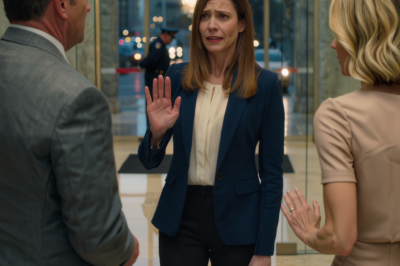
“The workday started over an hour ago,” I said, my voice like a scalpel. “You are late. You are out of uniform. And you are harassing a senior staff member. Put the phone away.”
That’s when it happened—the dismissive sneer, the bitter “old hag” comment tossed to her camera, and then the deliberate lunge. She didn’t trip. She turned, checked her camera angle, and slammed her iced coffee directly into my chest.
And now here we were.
The crowd was growing. People were filming. David had finished with his patient and was standing up now, his eyes widening as he recognized me, and he started toward us with a protective fury I hadn’t seen in years.
“Catherine, are you hurt?” David’s voice was a low rumble.
Tiffany laughed, sharp as grated glass. “Oh, you’re friends with this loser doctor. Perfect. Mark can fire both of you at once. He’s my baby. He bought me this dress. He’s going to make me a star.”
I looked at David. He saw the coffee, saw the girl, and saw the betrayal written in the lines of my face. “Don’t,” I whispered as he reached for his radio to call security. “This is a family matter. I want to see this play out.”
I pulled out my phone and dialed the number labeled my love. It rang three times before Mark answered in that hushed, important-man whisper he used when he wanted to sound busy.
“Honey, I’m in the middle of a massive meeting with the Singapore investors. Is everything okay? Did you land?”
Calling My Husband (The Speakerphone Reveal). I put the phone on speaker, and the lobby went so quiet you could hear the hum of the air conditioning.
“I’m in the lobby, Mark,” I said, my voice devoid of emotion. “Come down now.”
“The lobby? Honey, I told you this meeting is critical for the hospital’s future. Go home, take a bath. I’ll be there for dinner—”
“Mark,” I interrupted, the word landing like a blade. “Your wife just threw coffee on me. She’s currently livestreaming your secret to ten thousand people. If you aren’t down here in three minutes, I’m calling Arthur Vance and we’re discussing the two million missing from the MRI procurement fund.”
Silence. A heavy, suffocating silence from the other end of the line. Then the sound of a chair screeching back—and the line went dead.
Tiffany’s face drained from triumphant pink to a sickly, chalky white. The phone in her hand trembled. “What? What did you just say?”
I leaned in, my eyes locked on hers. “I said you should keep that livestream running. The climax is about to begin.”
Two minutes and forty seconds later, the executive elevator dinged. Mark burst out like a man running from a fire, his tie crooked, his forehead slick with sweat. He saw the crowd, saw the cameras, and then he saw me standing there in a coffee-stained suit, flanked by David Chen and my lead counsel, Arthur Vance, who had appeared from the shadows like a grim reaper in a pinstriped suit.
Tiffany let out a squeal of relief and ran toward him. “Mark, baby, you’re here. This crazy woman assaulted me. She’s lying about money. She’s—”
Mark didn’t hug her. He didn’t even look at her with affection. He looked at her with the pure, unadulterated hatred of a man who sees his golden goose being slaughtered because of a foolish mistake.
Smack.
The sound of Mark’s hand hitting Tiffany’s face echoed off the glass walls. She spun and fell hard onto the marble, her phone skittering across the floor.
“I don’t know this woman!” Mark screamed, his voice cracking with desperation. He turned to me, his hands shaking as he reached out. “Catherine, honey—she’s a stalker. She’s delusional. I’ve never seen her before in my life.”
I looked down at the girl on the floor. She clutched her red cheek, staring at the man who had promised her the world, finally seeing him for the coward he was.
“You don’t know her?” I asked, and I signaled to Arthur.
Arthur stepped forward and opened a leather dossier. “Mark Thompson, we have the deeds to the condo in Hudson Yards you purchased in Miss Jones’s name. We have the wire transfers from the Apex procurement account to her personal savings. And we have the security footage from the Mandarin Oriental.”
Mark’s knees hit the floor. He didn’t fall—he collapsed. He grabbed the hem of my stained pants, sobbing, his face a mask of pathetic terror.
“Catherine, please. It was a mistake. I was lonely while you were away. Don’t do this. Think of the children. Think of the company.”
I looked down at him and felt no anger. I felt only a profound sense of waste, as if I were watching a building rot from the inside and realizing it had been hollow for years.
“The company isn’t yours, Mark,” I said, my voice carrying to the very back of the lobby. “It never was. You were just a placeholder for a man who actually cared.”
I looked up at the crowd—at the nurses, the patients, the janitors who had stopped to witness the fall of a king. The Fall of the King: Termination. “My name is Catherine Hayes,” I announced. “Chairwoman of the board. Mark Thompson is terminated, effective immediately. David Chen is your interim CEO.”
The guards moved in then, hauling Mark to his feet. He didn’t go quietly. He was screaming, begging, a broken man being dragged out of the temple he’d defiled.
I turned to Tiffany. She was still on the floor, her makeup smeared with tears and spilled coffee. “You wanted to be famous,” I said, pointing to her phone, which was still live on the floor, recording everything. “Congratulations, you’re the top trending topic in New York. I hope the likes were worth the prison sentence for embezzlement.”
I walked out of the lobby, the clicking of my heels the only steady sound left in the room. David followed me out into the humid New York air, catching my arm before I could get lost in the noise of the street.
“Catherine,” he said softly. “What now?”
I looked at the skyline, at the city my father had helped build. The weight on my shoulders was still there, but for the first time in years it didn’t feel like a burden—it felt like a foundation.
“Now,” I said, thinking of the coffee stain over my heart, “I go home. I change my clothes. And then, David, we fix this hospital.”
I didn’t look back. The sun was setting, casting long golden shadows over the city, and for the first time, the air felt clean. The storm had passed, and though the ruins were still smoking, I knew exactly how to build something better from the ashes.
News

At my 30th birthday party, my father raised his glass and repeated the joke he’d used for years: that I’d never be able to buy a house, let alone “take care of myself.” Forty people laughed as if it were just a joke. I didn’t argue—I just silently pushed a bunch of keys across the table, and the letter that followed said it all.
At my 30th birthday party, my dad laughed and told everyone, “She’ll never afford a house—she can barely afford lunch.”…

“Mom withdrew the money from this account. I’ve already given it to my wife,” I told my son. “But your wife still needs another $300,000—she’s on her way by taxi,” he snapped. I didn’t argue and prepared a perfect plan to expose the truth of what it really was.
“I am going to withdraw my money from the account. You already gave yours to your wife,” I told my…

My daughter spent $20,000 on my credit card for her husband’s “dream cruise,” then smirked and said, “Mom, you don’t need the money anyway.” I just smiled and told her, “Enjoy yourself.” Then I started planning what would follow.
My daughter spent $20,000 on my credit card for her husband’s “dream cruise vacation.” She smirked and said, “You don’t…
On my wedding day, three empty pew rows told me my family had erased me—but the real blow came when my father returned with deputies, accusing me of stealing my mother’s savings. The wildfire, the missing ambulance, the forged signatures, and the FEMA suspension were only the opening moves. By the time a court panel replayed the footage, one notebook line shattered everything: “Don’t let Danica know.”
On my wedding day, my name—Danica Lel—echoed through a chapel filled with guests. But not a single person from my…
My father mocked me at his $25 million charity gala, calling me a waste of genetics—so I stepped onstage, revealed I control the state grant he needed, and calmly read his budget line by line to the stunned donors. By the time he realized the “dignity center” was really a vanity project, every receipt was already saved, every promise unraveled, and his spotlight turned into an investigation.
“Ladies and gentlemen, meet my daughter. “A total waste of good genetics.” That was the first thing my father said…
End of content
No more pages to load